
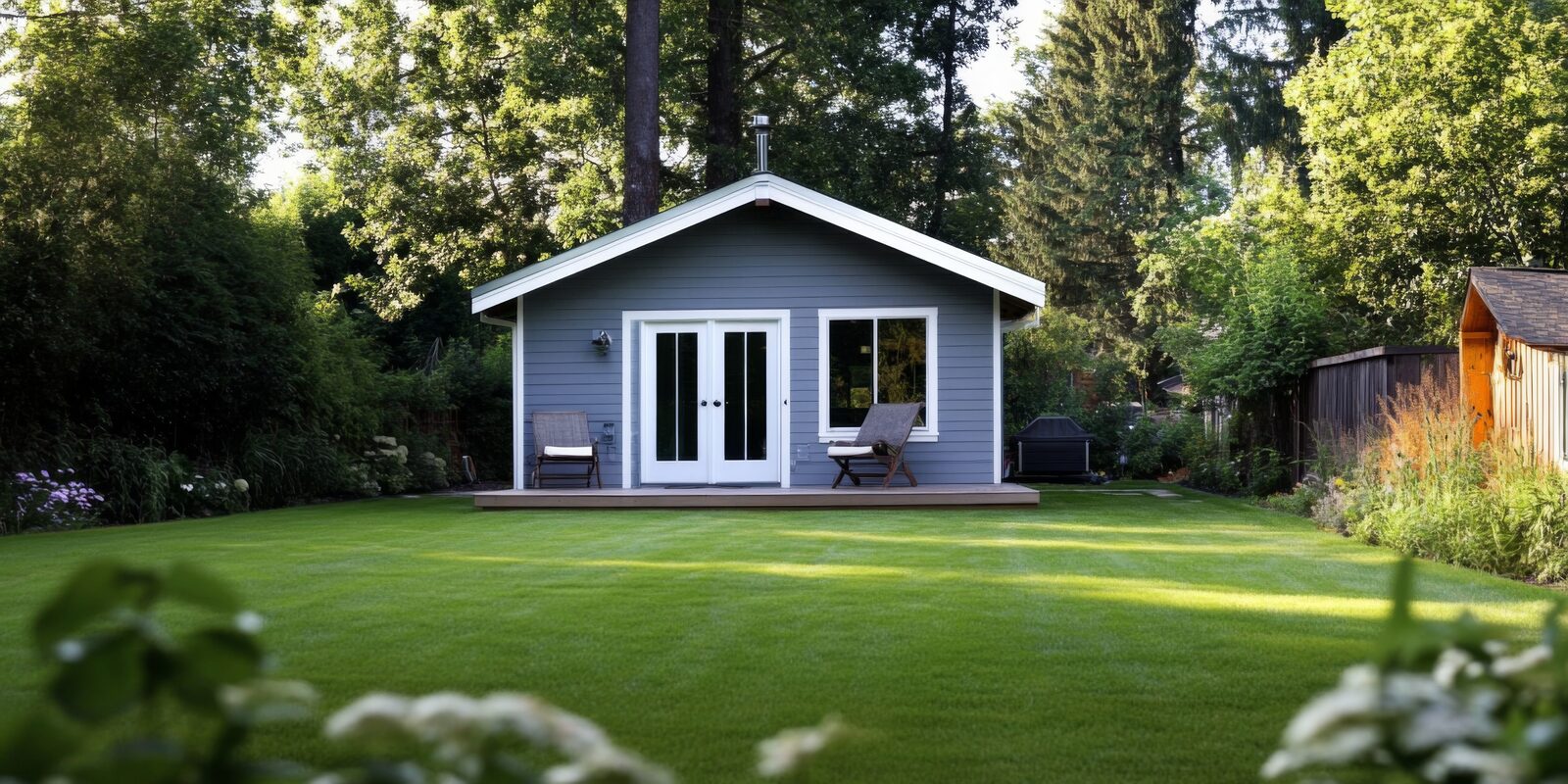
I’m getting more enquiries about granny flats as income properties than ever — and the first question is always the same: “what would it actually rent for, and do the numbers work?”
Short answer: current listings across major Gold Coast rental portals typically place modern, self-contained granny flats in the $350–$550 per week range — roughly $18,000–$28,000 a year before expenses — with premium locations occasionally exceeding that. Whether that makes your project stack up depends on what your block lets you build it for. A flat block with easy access and services nearby might see a total project cost in the low-to-mid $200,000s; a sloping block with difficult access and service upgrades can push well past $300,000 for the same floor plan. Same rent, very different return — your block sets the yield, not the brochure.
Quick answer
Typical rent: $350–$550/week (premium locations higher)
Typical annual income: ~$18k–$28k before expenses
Typical build cost: highly site-dependent — construction ~$2,200–$3,500/m², before site works and services
Best returns: blocks with straightforward services, good access and a design tenants actually want
Biggest mistake: running the numbers on generic build costs instead of your block’s actual feasibility
Queensland’s 2022 changes to secondary dwelling rules significantly broadened who can occupy eligible granny flats — since September 2022 they can generally be rented on the private market, not just to family. That change is what turned Gold Coast granny flats into a genuine income option, and it’s why running the numbers properly matters more than ever. As a licensed building designer and licensed builder, I see both sides of those numbers: what the design promises, and what the site actually costs to build on. Here’s how to run them for your block. (Still deciding whether a granny flat is right for you at all? Start with our honest look at whether a granny flat is worth building — this article assumes you’re now asking the investment question.)
Current listings across the major rental portals and industry guides put Gold Coast granny flat rents at roughly $350–$550 per week, with some quality flats in strong suburbs reaching $600. Where a flat lands in that range comes down to a handful of factors — and most of them are design decisions, not luck:
Notice how many of those are decided on the drawing board. Two granny flats with the same floor area can rent $100 a week apart because one was designed as a rental — private entry, acoustic separation, its own courtyard — and one was squeezed in as an afterthought.
For quick reference, here’s what the weekly range means annually:
| Weekly rent | Annual rent (52 weeks, before expenses) |
|---|---|
| $350 | $18,200 |
| $450 | $23,400 |
| $550 | $28,600 |
Recognised industry cost guides put Gold Coast granny flat construction at roughly $2,200–$3,500 per square metre, which for a typical 60–80m² build means construction alone in the $130,000–$280,000 range. But construction is only part of the real number. A realistic project budget also carries:
We deliberately don’t quote a single “granny flats cost $X” figure, because on the Gold Coast the site drives the cost as much as the building. The cheap quote that ignores site works and services isn’t cheaper — it’s just incomplete.
Here’s the framework I take investors through. It’s deliberately simple — the discipline is in using your block’s numbers, not the brochure’s.
1. Gross yield = (weekly rent × 52) ÷ total project cost.
As an illustration only: $480/week on a $250,000 all-in project is about 10% gross. The same rent on a $320,000 project (same flat, harder site) is 7.8%. That spread — driven entirely by the block — is the difference between a strong project and a marginal one. Gross yield is only the starting point, though: net return depends on ongoing costs and the suitability of the block, which is what the rest of this framework is for.
2. Then take out the running costs people forget:
| Cost | Why it matters |
|---|---|
| Vacancy allowance | No property rents 52 weeks a year, every year |
| Property management | If you won’t self-manage, allow the agency percentage |
| Insurance uplift | A second dwelling changes your policy |
| Rates and utilities | Council and water arrangements for a second dwelling |
| Maintenance | A rental gets more wear than a family flat |
| Tax treatment & depreciation | A new secondary dwelling has tax implications worth understanding before you build — one for your accountant |
3. Sanity-check against the alternative uses. Family accommodation now and rental later? Rental now, downsizer home for you later? The dual-living design decisions are different for each — and building the wrong version is the most expensive mistake on this page.
Nothing here is financial advice, and there is no guaranteed rental yield — these are design and feasibility considerations. For investment decisions, speak with your accountant or financial adviser.
This is the feasibility question underneath the investment question — and it’s where projects quietly succeed or fail before a single plan is drawn:
An honest note from the build side: if the numbers only work with the most optimistic rent, zero vacancy and a suspiciously cheap build quote — they don’t work. Over-capitalising on a difficult site is the most common way Gold Coast granny flats disappoint as investments, and it’s usually visible in a feasibility check before any money is spent on full design. That check is exactly what we do: assess your block, confirm the approval pathway, and give you a realistic all-in cost picture so your yield calculation uses real numbers. Our granny flat design service starts feasibility-first, with design fees from $3,000 for eligible projects.
Start with a paid $280 consultation. We’ll assess your block, project goals and likely constraints before you commit to full design work. Initial consultations are $280, payable before the appointment. If you proceed with design, that amount is credited in full to your design fees.
How much rent does a granny flat get on the Gold Coast?
Typically around $350–$550 per week on the current market, with well-located, well-finished flats higher. Location, size, privacy, parking and finish decide where in the range a flat lands — and most of those are design decisions.
Can I rent my granny flat to anyone in Queensland?
Since September 2022, Queensland allows secondary dwellings to be rented to people outside your household. How your dwelling is approved still matters — check the regulations guide before banking on rental income.
Is a granny flat cash-flow positive?
Some are, some aren’t — there’s no universal answer, because the two numbers that decide it are both site-specific: your total project cost (which your block largely determines) and the rent your design can achieve. A flat, well-serviced block with a rental-designed flat can be cash-flow positive; the same flat on an expensive site often isn’t. Run the gross-yield method above with your block’s real numbers, then subtract the running costs — that’s your answer, and it’s worth confirming with your accountant.
What running costs should I budget for?
Vacancy allowance, property management (if used), an insurance uplift, rates and utilities arrangements, maintenance, and tax treatment including depreciation — one for your accountant. Gross rent minus these is the number that matters.
Is a granny flat a better investment than buying a unit?
Different question for your financial adviser — but the design-side difference is control: on your own block, the build cost, quality and rentability are decisions you make rather than a market you buy into.
David Steadman
Licensed Builder & Building Designer
David Steadman is the founder of Design Science, a Gold Coast building design practice backed by over 30 years of hands-on construction experience. One of few Australians holding both a QBCC Builder's Licence and Building Designer licence, David brings a rare combination of design thinking and practical building knowledge to every project.
Fully insured • Personalised consultation • Transparent pricing
Transparent pricing with no hidden costs. 3D modelling and construction documentation are provided as set out in your agreed design scope. A complete bill of quantities can be provided at additional cost.
Request a Consultation

