
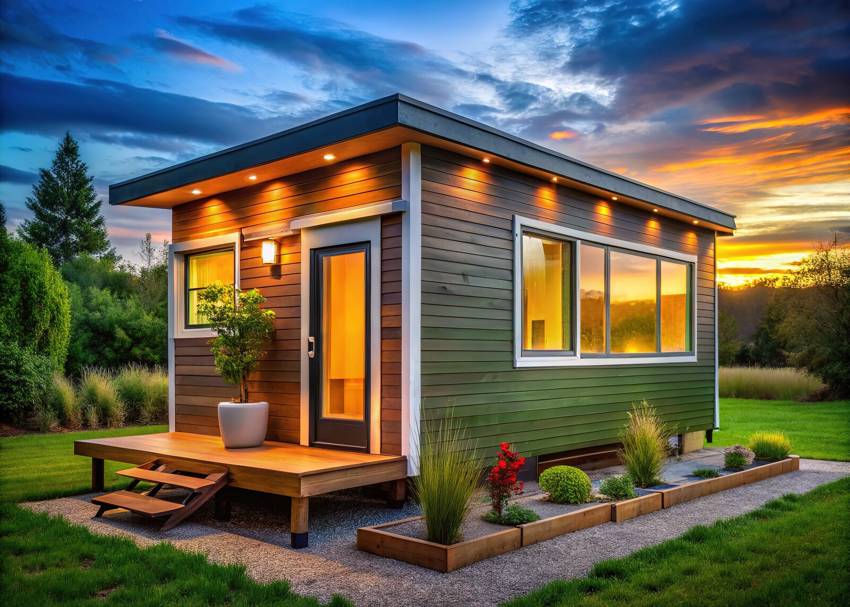
With housing tight and family budgets stretched, granny flats are becoming a serious option for Gold Coast homeowners. They promise a second income, a place for family, or extra value on your block — without buying another property. But before you spend a cent on plans, the real question isn’t “can I build one?” It’s “does it actually stack up for my block, my budget, and what I’m trying to achieve?”
Short answer: In many cases a granny flat can still be worth building on the Gold Coast in 2026 — but only when the block, approval pathway, site costs and intended use all stack up. It’s usually strongest for family accommodation, rental flexibility or long-term property value, and weakest where slope, access, services or overlays make the project expensive before construction even starts. It is not automatically a good investment — your site and approval pathway decide.
As a licensed building designer and licensed builder, we look at granny flats from both sides — the design and the build reality. Here’s an honest view of when one is worth it, and when it isn’t.
A granny flat (or secondary dwelling) is a self-contained second home on your existing lot. People build them for three main reasons — and whether it’s “worth it” depends entirely on which one is yours. For the size limits, setbacks and approval rules, see our Gold Coast granny flat regulations guide — this article is about the money-and-feasibility decision, not the rulebook.
| A granny flat may be worth it when… | It may not stack up when… |
|---|---|
| You have a clear family or rental use | The block has difficult access |
| The site is flat or manageable | Slope and site works are expensive |
| Services are easy to connect | Sewer/stormwater upgrades are costly |
| The second dwelling adds real flexibility | It overcrowds the main home |
| The approval pathway is clear | Overlays or setbacks restrict the design |
The build cost is only part of the picture — and it’s the part people underestimate. A realistic budget needs to include:
We’re deliberately not putting a single “granny flats cost $X” figure here, because on the Gold Coast the site drives the cost as much as the building. A flat, easy block with services at the boundary is a very different project to a sloping block with tricky access. Our design fees start from $3,000 for eligible projects, and we help you understand the likely cost drivers before you commit — so you’re not guessing.
If a quote sounds suspiciously cheap, it’s usually leaving out site works, services, or proper documentation — the things that cause cost blowouts later.
1. Family accommodation. Housing ageing parents, adult kids, or creating multi-generational living is often where a granny flat makes the most sense — you’re solving a real problem and avoiding the cost and upheaval of moving. If this is your goal, the design matters more than the dollar return: privacy, accessibility, and how the two homes share (or don’t share) outdoor space. (More in our dual living and multi-generational design guide.)
2. Rental income. A granny flat can generate rent, but two cautions. First, the return depends heavily on your build cost, your block, and the rental market — there’s no guaranteed yield, and the numbers vary from project to project. Second, renting a secondary dwelling has council and planning implications on the Gold Coast — what’s permitted depends on your zone and how the dwelling is approved. Check the rules before you bank on rental income (start with our regulations guide). For current rent ranges and investment maths, see our Gold Coast granny flat rental-income guide.
3. Property value and flexibility. A well-designed secondary dwelling can add value and give you options later — rent it now, house family later, or sell with a ready-made income stream. “Well-designed” is the operative phrase: a poorly planned granny flat that overcrowds the block or hurts the main home’s amenity can do the opposite.
Nothing in this article is financial advice; it is design and feasibility guidance. For numbers on rental return or property value, speak to your accountant or financial adviser.
This is where the feasibility call is really made, and where build-side experience matters. Before you commit, the questions that determine whether your project stacks up are:
A granny flat is worth it when the block supports it without fighting it. It stops being worth it when site works, access and compliance costs quietly outgrow the benefit — which is exactly what a feasibility check is meant to catch.
The smartest design depends on why you’re building. Renting long-term, housing family, and building-to-sell-later each point to different layouts, levels of separation, and finishes. Getting this right at the design stage is what protects the outcome — and it’s the part a drawing-only service often misses. (See how we approach this on our granny flat design service page.)
The honest answer to “is a granny flat worth it?” is: it depends on your block and your goal — and you can find that out before spending on a full design. A feasibility-first approach looks at your site, checks your zone and overlays, confirms the approval pathway, and gives you a clear cost picture before you commit.
Start with an initial consultation. We’ll assess your block, project goals and likely constraints before you commit to full design work. Initial consultations are $280, payable before the appointment. If you proceed with design, that amount is credited in full to your design fees.
How much does a granny flat cost to build on the Gold Coast in 2026?
It varies more than most people expect, because the site drives the cost as much as the building — slope, access and services can change the budget significantly. A site-specific assessment gives a far more reliable number than a generic per-square-metre figure.
Can I rent out a granny flat on the Gold Coast?
Sometimes — it depends on your zone and how the dwelling is approved. There are council and planning implications, so check the rules before relying on rental income. Our regulations guide covers the legal side.
Do granny flats add value to my property?
A well-designed one can add value and flexibility. A poorly planned one that overcrowds the block can reduce the main home’s appeal — design quality is the deciding factor.
Is it cheaper to build a granny flat or extend the house?
Different goals, different sums. If you need a separate dwelling, a granny flat makes sense; if you need more space in your existing home, an extension may be better value. We can compare both for your block.
How big can a granny flat be?
There are size limits and rules that depend on the approval pathway — see the granny flat regulations guide for the specifics.
David Steadman
Licensed Builder & Building Designer
David Steadman is the founder of Design Science, a Gold Coast building design practice backed by over 30 years of hands-on construction experience. One of few Australians holding both a QBCC Builder's Licence and Building Designer licence, David brings a rare combination of design thinking and practical building knowledge to every project.
Fully insured • Personalised consultation • Transparent pricing
Transparent pricing with no hidden costs. 3D modelling and construction documentation are provided as set out in your agreed design scope. A complete bill of quantities can be provided at additional cost.
Request a Consultation

