
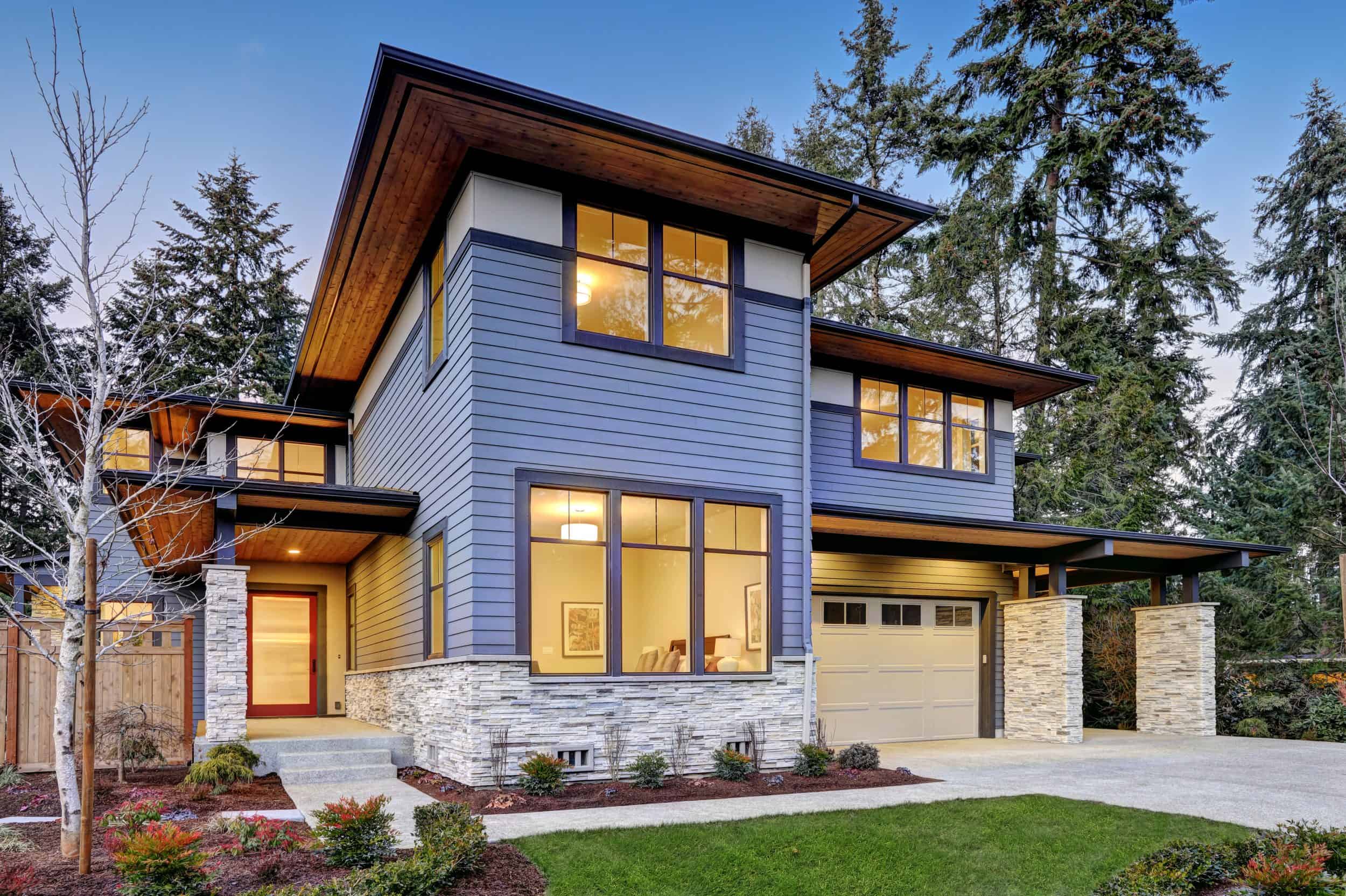
Dual living on the Gold Coast means two separate dwellings on a single lot — either under the same roof with separate entries, or a detached secondary dwelling in the backyard. The Gold Coast City Plan allows this in most Low Density Residential zones, with the secondary dwelling capped at 80m² of gross floor area (GFA) for accepted development. Adding a well-designed secondary dwelling typically costs $150,000–$350,000 depending on configuration, and a quality design can return $350–$500 per week in rental income.
Dual living on the Gold Coast usually means adding or adapting a home so two households can live on one property with more privacy, independence and flexibility. The right pathway depends on whether the second living area is a secondary dwelling, dual occupancy, internal conversion or raise-and-build-under project, because each has different City Plan, NCC, parking, access and budget implications. Design Science can review the block, test the likely pathway and prepare design documentation your builder, certifier and consultant team can understand, price and work from — but we do not issue approvals or act as council or your building certifier.
I’ve designed dozens of dual living homes on the Gold Coast, and the demand has exploded in the last three years. Housing affordability is pushing families to pool resources — parents moving in with adult children, grown kids building on the family block, and investors maximising rental yield from a single property. The design decisions you make at the start determine whether both occupants feel like they have privacy and a real home, or whether one party ends up in an afterthought.
There are four main configurations, each with different cost, privacy, and council approval implications.
The most cost-efficient option. Both dwellings share a common wall but have completely separate entrances, living areas, kitchens, and bathrooms. A fire-rated party wall is required under the National Construction Code (NCC) — this is one area where a licensed builder’s knowledge is essential, because the NCC requirements for fire separation in attached dwellings are specific and non-negotiable.
Approximate cost: $250,000–$350,000 for a new attached secondary dwelling (including the party wall construction).
A freestanding structure on the same lot — the classic “granny flat” configuration. More privacy for both parties but requires additional structure, separate slab, and independent roof. Under the Gold Coast City Plan, a detached secondary dwelling in a Low Density Residential zone can be up to 80m² GFA as accepted development (no Development Application required if all criteria are met).
Approximate cost: $180,000–$300,000 for a purpose-built detached dwelling of 60–80m².
Many Gold Coast homes on stumps can have a second dwelling created under the existing structure by raising the house and building in beneath it. This is one of the most cost-effective paths to dual living when the block allows it — you’re using the existing structure rather than building from scratch.
Approximate cost: $150,000–$250,000 depending on the extent of raising works and under-build fit-out. See our detailed guide on raise and build under on the Gold Coast.
Converting a large existing home into two separate dwellings by creating a second kitchen and separate entry. Cheapest upfront, but often the most complex from a council compliance perspective — fire separation, independent metering, and dual occupancy rules can make this harder to approve than a new detached dwelling.
Approximate cost: $80,000–$150,000 for an internal conversion, but allow a significant budget for council processes if approval is required.
The Gold Coast City Plan is the governing document. Getting this right before you start design saves thousands in abortive work.
Secondary dwellings are permitted as accepted development in the Low Density Residential zone — which covers the majority of residential Gold Coast. In Medium Density Residential and other zones, different rules apply. Check your property’s zone at the Gold Coast City Council interactive mapping tool before assuming dual living is straightforward on your block.
Under the Gold Coast City Plan, a secondary dwelling can be up to 80m² GFA as accepted development. Some lots — particularly those over 600m² — may allow slightly larger configurations under code assessment. The 80m² limit applies to the secondary dwelling only; there is no limit imposed by this rule on the primary dwelling size.
Setback requirements for the secondary dwelling follow the same rules as the primary dwelling: typically 6m front setback, 1.5m side setbacks, 6m rear setback in Low Density Residential. Total site coverage (primary + secondary dwelling footprints) must not exceed the standard site coverage limit for the zone — usually 50% in Low Density Residential.
The City Plan requires one additional car parking space for the secondary dwelling. This must be on-site, not on the street. On smaller lots this can become a genuine constraint on the design.
If your proposed secondary dwelling meets all the accepted development criteria — correct zone, under 80m², compliant setbacks, adequate parking, matching materials — you can proceed without a Development Application. You’ll still need a Building Approval from a private certifier. If any criteria aren’t met, a Development Application to Gold Coast City Council is required, adding 4–12 weeks and $3,000–$8,000 to your costs.
This is where many owner-designed dual living projects get caught out. The NCC requires fire-rated construction between dwellings — specific wall assemblies, self-closing fire doors, and FRL (Fire Resistance Level) requirements that need to be documented correctly in the design. As a licensed builder, I build this compliance into every set of plans from the start, not as an afterthought that triggers costly redesigns at the approval stage.
If you ever want to rent the secondary dwelling independently — or sell it separately if the planning scheme allows — you’ll need separate metering for electricity and water. Budget $15,000–$25,000 for separate metering infrastructure. Installing this during construction is far cheaper than retrofitting later.
On attached dual living, acoustic performance between the dwellings matters enormously for liveability. The NCC has minimum sound transmission class (STC) requirements, but exceeding them — using mass-loaded vinyl, resilient channels, or dense masonry — makes a significant difference to daily life for both households.
Both dwellings need entries that don’t route through the other’s space. The secondary dwelling should have a private outdoor area that isn’t overlooked by the primary dwelling. This sounds obvious, but I’ve reviewed designs where the “granny flat” entry passes through the main house garage, or where the backyard dwelling’s only private space is directly observed from the main house living areas. These things kill livability and, eventually, the relationship between occupants.
If parents are moving into the secondary dwelling, design for today and tomorrow. Wider doorways (820mm minimum, 920mm preferred), level threshold entries, a bathroom large enough to accommodate a future grab rail, and a bedroom on the ground level are low-cost design decisions that make an enormous difference as mobility changes over time.
On a compact Gold Coast block, fitting two dwellings without one of them becoming dark and poorly ventilated requires careful orientation and design. A detached secondary dwelling at the rear of a north-facing block will get good natural light. An attached dual living arrangement where the secondary wing faces south needs carefully designed roof forms and window placement to compensate.
A well-designed secondary dwelling on the Gold Coast in a good suburb can return $350–$500 per week in rental income. At $420/week, that’s $21,840 per year — a gross yield of 7.3% on a $300,000 construction cost. That’s before considering the capital value added to the overall property.
A properly approved, well-designed secondary dwelling typically adds more to the property’s value than its construction cost, particularly in the current Gold Coast market where rental vacancy rates remain low. A $250,000 secondary dwelling often adds $350,000–$400,000 to the property’s sale value.
Buying a second property for $600,000 incurs approximately $21,850 in stamp duty in Queensland, plus ongoing rates for two properties. Building a secondary dwelling on an existing lot avoids that impost entirely — and consolidates rates to a single property. For families considering a separate purchase for ageing parents, the maths strongly favours building on the existing block.
Not automatically. Your block must be in an appropriate zone (typically Low Density Residential), meet minimum lot size requirements, and have sufficient space for setbacks, parking, and site coverage. Most standard residential blocks in Gold Coast suburbs qualify, but it’s worth checking your block’s planning overlay before committing to a design. I provide a planning feasibility assessment as part of our initial consultation.
Under the Gold Coast City Plan, a secondary dwelling as accepted development is capped at 80m² gross floor area. This is about the size of a 2-bedroom apartment — more than adequate for a couple or single occupant. Some larger lots may be able to go above 80m² via code assessment, but this requires a more detailed planning analysis.
You always need a Building Approval from a private certifier. Whether you also need a Development Application from Gold Coast City Council depends on whether your proposal meets all the accepted development criteria. If it does, you can bypass the DA process entirely. If not — for example, you need a larger secondary dwelling or your setbacks are non-standard — a DA is required.
Yes. Under Queensland law, secondary dwellings approved after September 2022 can be rented to any tenant — the previous requirement that the occupant be a relative was removed. This makes dual living a genuinely viable investment strategy, not just a family arrangement.
Design fees for a secondary dwelling or dual living configuration start from $3,000 for a straightforward detached secondary dwelling up to $8,000–$12,000 for a complex attached dual occupancy requiring a Development Application. Construction costs range from $150,000–$350,000 depending on configuration, size, and finishes. Our initial consultation includes a cost estimate and planning feasibility assessment.
Under the Gold Coast City Plan, a “secondary dwelling” (sometimes called a granny flat) is a smaller dwelling ancillary to the main home — capped at 80m² and requiring only one owner. “Dual occupancy” is a higher-density configuration where two dwellings of roughly equal size exist on the same lot — this requires a Development Application and different approvals. Most families and investors pursuing dual living are looking at the secondary dwelling pathway, which is faster and lower cost to approve.
If you are comparing that arrangement with two independent dwellings on one site, read our Gold Coast duplex design, regulations and costs guide.
Planning dual living on the Gold Coast requires navigating the City Plan, NCC fire requirements, and council approval pathways — before a single design decision is made. As a licensed builder and licensed building designer, I bring both the technical compliance knowledge and the design capability to make your dual living project work for both occupants.
Request a Consultation — we’ll assess your block, discuss your options, and give you a realistic picture of what’s achievable, what it will cost, and how long it will take. Initial consultations are $280, payable before the appointment. If you proceed with design, that amount is credited in full to your design fees.
Also see: Granny Flat & Secondary Dwelling Design Gold Coast | Granny Flat Regulations Gold Coast 2026 | Renovation & Redesign Services | Building Designer Cost Gold Coast 2026 | How We Work
David Steadman
Licensed Builder & Building Designer
David Steadman is the founder of Design Science, a Gold Coast building design practice backed by over 30 years of hands-on construction experience. One of few Australians holding both a QBCC Builder's Licence and Building Designer licence, David brings a rare combination of design thinking and practical building knowledge to every project.
Fully insured • Personalised consultation • Transparent pricing
Transparent pricing with no hidden costs. 3D modelling and construction documentation are provided as set out in your agreed design scope. A complete bill of quantities can be provided at additional cost.
Request a Consultation

