
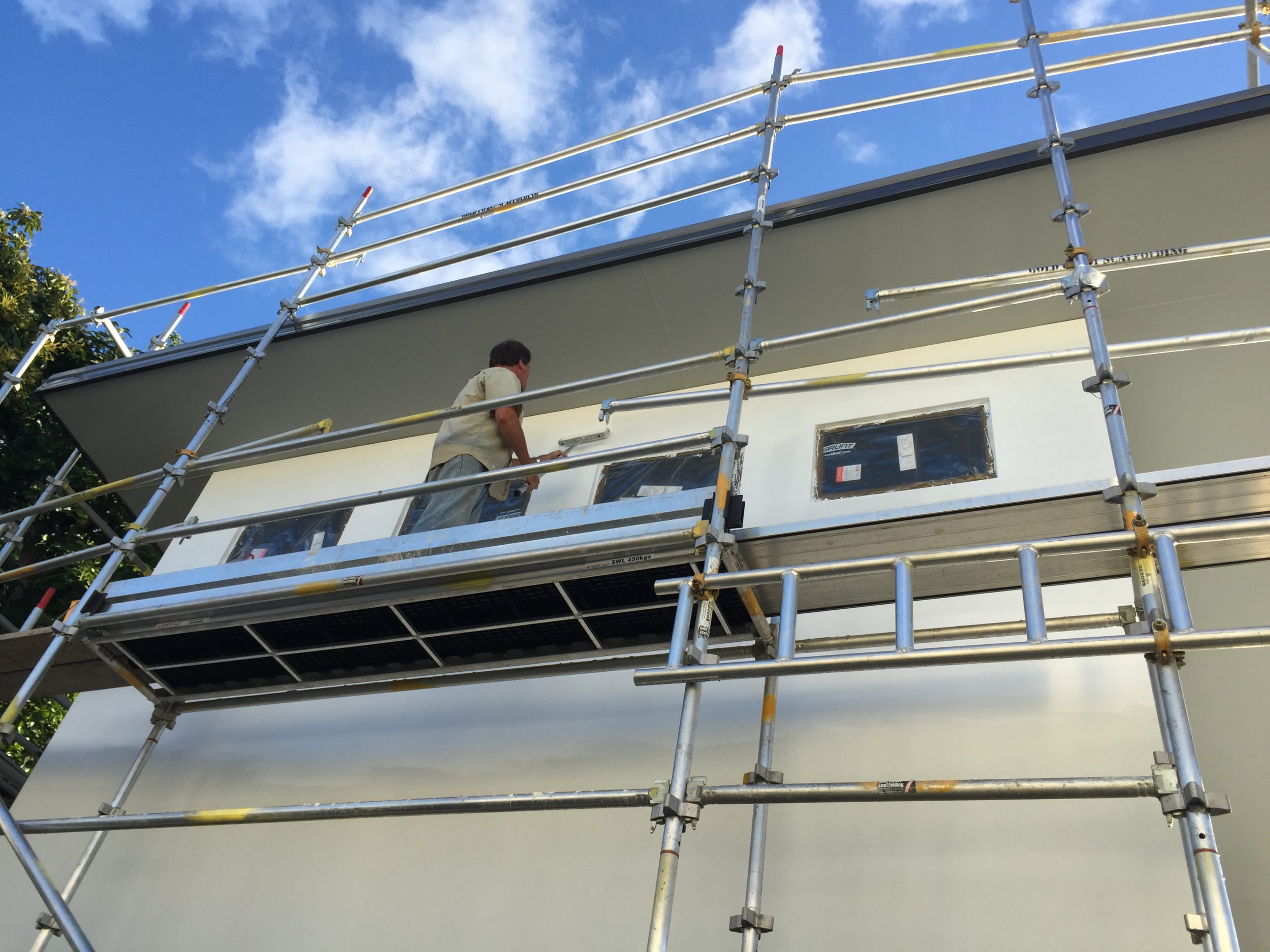
Owner building on the Gold Coast means you are the licensed builder — legally responsible for everything from hiring trades to coordinating council inspections. Queensland’s Building Act requires an Owner Builder Permit from the QBCC for any residential building work valued over $11,000 (2026 threshold). You still need a building designer for plans, a private certifier for building approval, structural engineers for footings and steel, and licensed tradespeople for plumbing, electrical, and waterproofing. The average cost saving is 15–25% on labour management costs — but I’ve watched enough owner builds to know that many people spend more, not less, when you account for rework, delays, and time.
As an owner builder, you take on the builder’s legal and coordination role. Design Science does not become the owner builder, certifier or trade contractor. Our role is to prepare building design drawings and documentation that trades can price from, certifiers can assess, and you can use to run the project with fewer assumptions.
I’ve worked both sides of this. As a licensed builder who has also designed dozens of projects, I understand why owner building is attractive and exactly where it goes wrong. This guide gives you the unvarnished picture — not to talk you out of it, but to make sure you go in with realistic expectations.
You need an Owner Builder Permit from the QBCC for any owner-built residential work valued over $11,000. Applications are made through the QBCC website. Processing typically takes 10–15 business days. The permit lists the specific project address and is non-transferable.
Before you can apply, you must complete a QBCC-approved Owner Builder course. These are available online and typically take 8–16 hours to complete. The course covers your legal obligations, safety requirements, and basic project management. It costs approximately $150–$300 and must be completed within 2 years before your application.
You must intend to occupy the property as your principal place of residence. You cannot owner-build purely as an investment property or a flip. The QBCC checks this and will reject applications where the intent is clearly commercial.
You can only obtain one Owner Builder Permit every 6 years. This prevents the practice of serial owner building to avoid licensing requirements. If you have an existing owner-built property that you haven’t yet sold, check the dates carefully before applying.
As an owner builder, you take on ALL statutory warranty obligations that would normally be carried by a licensed builder. Under the Queensland Building and Construction Commission Act, this means defects liability for 6 years and 6 months (for structural defects). This obligation transfers to you personally — there is no QBCC Home Warranty Insurance to fall back on, because that only applies to licensed builders.
If you sell an owner-built property within 6 years of the building approval being issued, you must disclose the owner-built status to the buyer. The buyer is entitled to inspect the property, and you may need to obtain a defect report. Failure to disclose is a serious offence under Queensland law.
The permit gives you authority to manage the project — it does not give you authority to do all the work yourself. These remain mandatory:
You need a licensed building designer or appropriately qualified design professional to prepare your Development Application and Building Approval documentation. Plans must respond to NCC requirements, include structural drawings from an engineer, energy assessments, and site plans. Cutting corners on documentation is one of the most common owner builder mistakes — trades cannot price accurately from incomplete plans, and certifiers may reject poorly prepared applications.
This is where Design Science works with many owner builders: construction-ready documentation that gives trades clearer information to price and build from, reducing the room for expensive “that’s not in the plans” disputes.
Footing design, steel beam sizing, load paths through the structure — all must be certified by a registered structural engineer (RPEQ in Queensland). The engineer’s certificate is part of your building approval documentation. Budget $2,500–$6,000 for structural engineering on a typical residential project.
All new homes and major renovations must meet NCC 2022 energy efficiency requirements — a 7-star NatHERS rating or a whole-of-home performance pathway. A NatHERS assessor runs computer modelling on your plans to demonstrate compliance. Budget $500–$1,200.
A licensed building certifier assesses your plans for Building Approval and then inspects the work at mandatory stages — typically footing inspection, frame inspection, and final inspection. Budget $1,500–$3,500 for a standard residential project. The certifier is your compliance checkpoint, not your enemy — an experienced certifier who flags issues at frame stage saves you from pulling completed work apart later.
Plumbing (QBCC licensed), electrical (licensed electrical contractor), waterproofing (QBCC licensed), gas fitting (licensed) — these cannot be done by an unlicensed person regardless of owner builder status. Budget these as line items at licensed trade rates. You’re managing the coordination, not doing the work yourself.
A typical Gold Coast renovation or extension valued at $400,000 (builder’s quote) might cost an owner builder $300,000–$340,000 in trade and materials costs — a saving of $60,000–$100,000, or 15–25%. That saving is real. But account for:
If everything goes well — good trades, no significant rework, an experienced owner builder who has done this before — you can save $50,000–$80,000 on a $400,000 project. If things go wrong — a trade walks off the job, structural issues appear at frame stage, you underestimate the documentation requirements — you can easily spend more than a builder would have charged.
The single most common failure. Plumbers arrive before the frame is inspected. Electricians rough in before the insulation decisions are made. The renderer turns up before the waterproofing certificate. Managing trade sequencing on a complex build is a full-time job — experienced builders spend years learning this, and owner builders often learn it the hard way, through expensive rework.
I’ve seen owner builders who thought they just needed a “set of plans” start discovering the full documentation requirement stack at week 8: energy report, engineering, soil report, BASIX or NatHERS compliance, stormwater management plan, bushfire assessment. Each takes time and costs money. This is why starting with a thorough brief to your building designer — and getting all the documentation complete before you start — is non-negotiable.
The NCC 2022 has new requirements for waterproofing, energy efficiency, and accessibility that many owner builders aren’t aware of. Getting caught with non-compliant work at inspection stage means stop-work orders and compulsory rectification — at your cost, with no leverage against the trade who installed it incorrectly.
I’ve seen this happen three times in the last two years. Owner builder hits lock-up stage, has spent all their budget, and has no money to finish the fit-out. The house sits locked up for 6–18 months while they save more money. A properly prepared budget — with a 15% contingency and a clear breakdown of every cost stage — is essential before you start.
Single-storey project, construction or trades background, significant time available (10+ hours/week minimum), project value over $300,000 (savings are meaningful), strong organisational skills, comfortable with compliance documentation and dealing with council.
Complex renovation of an existing home (many unknowns), two-storey or structurally complex project, limited time (full-time job with young children), tight budget where any rework would be catastrophic, first major building project with no construction experience.
The irony is that tight budget is often the motivation for owner building, but tight budget is also the worst condition to owner build in. Experienced builders know how to manage budget — inexperienced owner builders often spend more trying to save.
You need a QBCC Owner Builder Permit, not a builder’s licence. The permit requires you to complete an approved Owner Builder course and establishes you as the responsible person for the project. It is not a full building licence — it covers one specific project on your principal place of residence and expires once that project is complete.
The average saving on labour management is 15–25% of the total project cost. On a $400,000 project, that’s $60,000–$100,000 before factoring in rework, retail materials pricing, your time, and insurance. Real-world savings after all costs are typically $30,000–$70,000 on a standard residential project.
Yes. You need a licensed building designer (or architect) to prepare your Building Approval documentation — plans, NCC compliance notes, energy reports, structural drawings. Owner builder status gives you authority to manage the build; it does not authorise you to design your own home. Incomplete or non-compliant plans are the most common cause of delays and cost blowouts in owner builder projects.
You need Contract Works Insurance (covering the structure under construction) and Public Liability Insurance. QBCC Home Warranty Insurance is NOT available to owner builders — this is a significant risk exposure if structural defects emerge after completion. Some owner builders take out additional professional indemnity cover. Budget 1.5–2.5% of the project value for insurance.
Yes, provided the work value exceeds $11,000 (requiring the permit) and the property is your principal place of residence. Renovations are often more complex than new builds due to unknown existing conditions — asbestos, termite damage, substandard previous work — so if anything, owner building a renovation requires more construction experience, not less.
If you sell within 6 years of the building approval being issued, you must disclose the owner-built status in the contract. The buyer is entitled to commission a defect inspection report. You remain liable for structural defects for 6 years and 6 months. This disclosure obligation and liability exposure should factor into your decision-making, particularly if you plan to sell within a few years of completing the project.
Even as an owner builder, your project’s success starts with professional design documentation. Trades cannot price accurately from vague plans. Certifiers reject incomplete applications. The 20 hours saved by cutting corners on design will cost you 200 hours in disputes, rework, and delays on site.
We produce construction-ready plans with enough detail for trades to price more accurately and for owner builders to run the project with fewer assumptions. Request a consultation — Initial consultations are $280, payable before the appointment. If you proceed with design, that amount is credited in full to your design fees.
Also see: Cost to Build a House Gold Coast 2026 | Building Approvals Gold Coast — DA vs BA | What Is a QBCC Licence? | Custom Home Design Services | How We Work
David Steadman
Licensed Builder & Building Designer
David Steadman is the founder of Design Science, a Gold Coast building design practice backed by over 30 years of hands-on construction experience. One of few Australians holding both a QBCC Builder's Licence and Building Designer licence, David brings a rare combination of design thinking and practical building knowledge to every project.
Fully insured • Personalised consultation • Transparent pricing
Transparent pricing with no hidden costs. 3D modelling and construction documentation are provided as set out in your agreed design scope. A complete bill of quantities can be provided at additional cost.
Request a Consultation

