
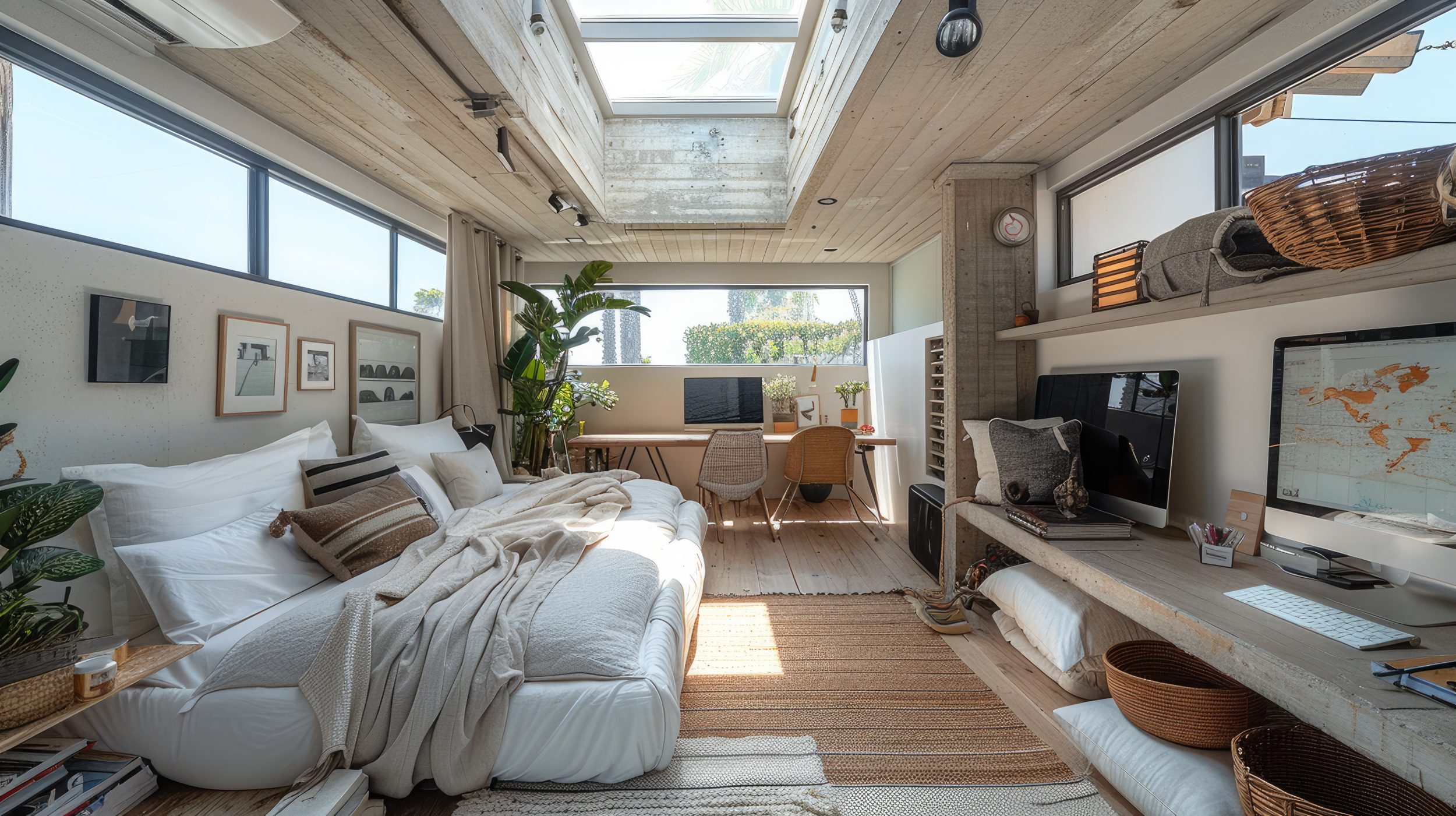
It’s one of the most common questions I get from Gold Coast homeowners: “We need another bedroom — can we just convert the garage?”
The honest answer is: often yes, but it’s not as simple as throwing up a stud wall, laying some carpet and moving a bed in. A garage and a bedroom are two different things in the eyes of the building code, and the gap between them is where most DIY garage conversions come unstuck — usually years later, when the home is being sold or insured.
Here’s what’s actually involved in doing it properly on the Gold Coast, so you can work out whether your garage is a good candidate before you spend a dollar.
Yes, many Gold Coast garages can be converted into bedrooms, but it is a building-code and approval question before it is a decorating question. The main checks are ceiling height, natural light and ventilation, slab moisture, floor level, insulation, smoke alarms, fire separation, parking and whether a building certifier or planning pathway is needed. Design Science can review the existing garage, design a realistic conversion and prepare documentation your certifier, builder and consultant team can assess, price and work from — but we do not issue approvals or act as council or your building certifier.
In the National Construction Code, a garage is a Class 10a structure — a non-habitable building. A bedroom is a habitable room that forms part of a Class 1a dwelling.
Turning a garage into a bedroom is therefore a change of building classification, from 10a to 1a. That’s a formal step, not a cosmetic one. To reclassify the space, it has to be brought up to the minimum Class 1a standard in the building code before it’s occupied as a bedroom — and that’s assessed through a building approval. We’ll come to approvals further down, but it’s worth understanding that framing first, because it’s what drives everything else on this page.
The code splits rooms into habitable and non-habitable. A bedroom, living room, kitchen, study or family room are all habitable rooms. A bathroom, laundry, hallway or — yes — a garage are not.
The moment you intend to use a space for sleeping or normal day-to-day living, it has to meet the habitable-room requirements. That’s the line you’re crossing, and it’s why a garage can’t simply be “used as a bedroom” without work.
Even if you call it a study, guest room, teen retreat or rumpus room, the same issue applies: once the space is intended for normal living or sleeping, it needs to be treated as a habitable room. The label on the plan matters less than how the space will actually be used — so it’s worth being realistic about that from the start, because how the room is used is what determines what the code asks of it.
These are the main hurdles. They’re the Deemed-to-Satisfy provisions of NCC 2022 — the standard yardsticks. Where a garage can’t quite meet one, there’s sometimes an alternative path (more on that later), but it’s best to assume these apply.
A habitable room needs a ceiling height of at least 2.4 metres. A garage, by contrast, only needs 2.1 metres. Plenty of older Gold Coast garages sit right on that lower mark — so the very first thing worth checking is whether your garage ceiling is tall enough to become a bedroom at all.
A bedroom needs real windows. The code asks for window light-transmitting area of at least 10% of the room’s floor area, and openable area for ventilation of at least 5% of the floor area. Most garages have no windows at all, so converting one almost always means cutting new openings into the walls — which has cost and structural implications.
This is where garage conversions most often fall down. Habitable rooms have to be protected from ground moisture, which the code handles with a damp-proof membrane under the slab. Garage slabs frequently don’t have one — they were never meant to sit under a bedroom — and that’s not something you can see by looking.
On top of that, a garage slab is usually graded to fall towards the door so water runs out, and it often sits low to the ground. A habitable floor needs to sit high enough above the surrounding ground to keep surface water out. So you can be looking at re-grading, a step, additional drainage, or a moisture barrier solution before the floor is fit for a bedroom.
New habitable rooms have to meet the current energy-efficiency standard, which in practice means insulation to the walls, ceiling and where relevant the floor, suitable glazing, and proper sealing — assessed for our climate here on the Gold Coast. An energy assessment forms part of the approval, so this isn’t optional dressing; it’s part of getting the space signed off.
Queensland has strict smoke-alarm rules: photoelectric, interconnected alarms in every bedroom, in hallways linking bedrooms, and on every storey. Adding a new bedroom means that bedroom needs its own interconnected alarm, and the work typically brings the whole home up to the current interconnected standard (which all Queensland homes have to meet by 1 January 2027 anyway).
Fire separation can also come into play — for example if you’re only converting part of the garage and keeping the rest as a garage, a fire-rated wall is needed between the two, and there are rules where a garage adjoins living areas or sits close to a boundary.
A few more that catch people out: the old roller-door opening has to be infilled with a proper, weatherproofed external wall (insulated and clad, often with a new window) rather than a flimsy panel; the existing slab and frame may need an engineer to confirm they’re suitable; and termite protection has to be in place. None of these are dramatic on their own — but together they’re the difference between a compliant bedroom and an expensive problem.
Here’s the one that surprises homeowners most. For many detached houses on lots of 450 m² or more, the Queensland Development Code generally expects space for two vehicles on the lot. Your garage is usually part of how the home meets that.
Convert the garage to a bedroom and you’ve removed covered parking. If that drops your home below the required on-site parking, you may need to provide a replacement space — a hardstand or a carport — to stay compliant. Exactly what’s required depends on your lot and the Gold Coast City Plan, so it’s something to check for your property early, not assume.
Homeowners often call this “council approval,” but the first approval question is usually building approval through a private certifier — planning approval is separate and depends on the site.
In most real garage-to-bedroom conversions, yes — you should expect a building approval for the change of classification to be required, assessed by a private building certifier. The space can’t be lawfully used as a bedroom until the work is approved, built and given a final inspection certificate. If any plumbing is involved, that’s a separate council approval too.
Sometimes you’ll also need a planning (development) approval — for instance if your property sits in a character, flood or bushfire overlay, or if the parking change or an extra bedroom triggers a rule under the planning scheme. Building approval and planning approval are two different things, and which ones you need depends on your specific site. (We go into the council approval side of renovations in more detail separately.)
Design Science does not issue approvals or act as council or your building certifier. What we can do is design the conversion against the relevant standards, prepare the drawings and supporting documentation, and help your certifier, builder and consultant team assess the pathway earlier.
I’d rather be straight with you than sell you a dream. Some garages convert beautifully. Others really don’t — and it’s better to know that on day one.
A garage with a low ceiling, a slab that falls to the door and no easy way to add windows or replace the lost parking can end up costing more to convert properly than building a small extension would. In those cases there’s often a better option — a house extension, or a granny flat or secondary dwelling if you need more independent space. Part of the value of getting advice early is being told honestly when the garage isn’t the smart move.
Where a garage can’t quite meet one of the standard requirements — say the ceiling is a touch low — there’s sometimes an alternative “performance” pathway through approval, but it needs to be properly justified, not assumed.
A garage conversion lives or dies on the things you can’t see: the slab, the moisture, the structure, the parking maths, the approval pathway. That’s exactly where a proper set of plans earns its keep — current and proposed drawings, the compliance detail, and a design that’s been thought through to be built, not just drawn.
I’m one of the few people in Australia who holds both a Building Designer licence and a builder’s licence. For a job like this, that combination matters: I can look at your garage and tell you early whether it’s a realistic candidate, what it’ll genuinely take, and whether your money is better spent elsewhere — then prepare documentation a certifier can assess and a builder can actually price and build.
If you’re weighing up a garage conversion on the Gold Coast, the best first step is a proper look at what you’ve actually got — the ceiling, the slab, the parking and the approval path — before you commit to anything.
Design fees start from $3,000. Request a consultation and we’ll work through whether your garage is a good candidate, and how we’d design the conversion to meet the code. Initial consultations are $280, payable before the appointment. If you proceed with design, that amount is credited in full to your design fees. If a garage conversion turns out to be the wrong fit, we’ll tell you — and look at the renovation or extension options that suit your home better.
Usually, yes — though people often call this “council approval.” In most garage-to-bedroom conversions the first approval is a building approval, assessed by a private building certifier, for the change of building classification — and the room can’t be lawfully occupied until it’s approved, built and given a final inspection certificate. A separate planning approval may also be needed depending on your site.
A habitable room such as a bedroom generally needs a ceiling height of at least 2.4 metres. Many older garages are built to a lower height, so this is one of the first things worth checking.
A bedroom floor has to be protected from ground moisture and from surface water. Garage slabs often have no damp-proof membrane and are graded to fall towards the door, so they may need a moisture solution, re-grading or a step before the space is suitable to live in.
Possibly. A Gold Coast house is generally expected to provide on-site parking, and the garage is usually part of that. If converting it drops you below what’s required, you may need to provide a replacement space such as a carport or hardstand. It’s worth checking for your specific property early.
No. Some garages convert well; others have low ceilings, slab or moisture issues, or no practical way to replace lost parking, and aren’t worth converting. In those cases an extension or a secondary dwelling is often the better option — which is exactly the kind of thing to work out before you start.
A garage conversion turns on the things you can’t see — the slab, moisture, structure, parking and approvals. Holding both a building designer and a builder’s licence means the design is checked against how it will actually be built and costed, and you get an honest read early on whether the conversion stacks up.
David Steadman
Licensed Builder & Building Designer
David Steadman is the founder of Design Science, a Gold Coast building design practice backed by over 30 years of hands-on construction experience. One of few Australians holding both a QBCC Builder's Licence and Building Designer licence, David brings a rare combination of design thinking and practical building knowledge to every project.
Fully insured • Personalised consultation • Transparent pricing
Transparent pricing with no hidden costs. 3D modelling and construction documentation are provided as set out in your agreed design scope. A complete bill of quantities can be provided at additional cost.
Request a Consultation

