
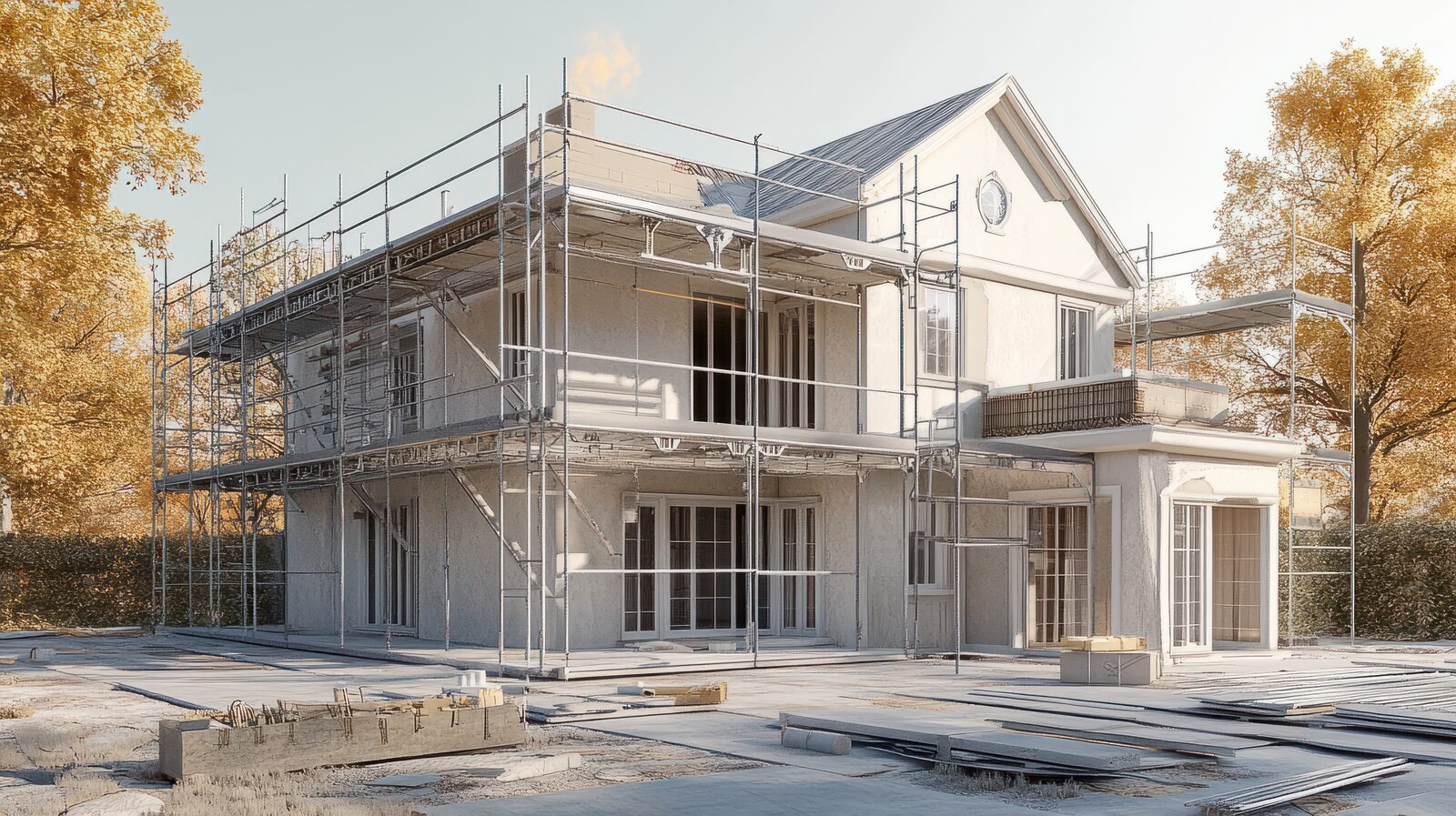
Construction costs on the Gold Coast are rising sharply in 2026 — and this time it is not just general inflation. Master Builders Queensland has issued an industry alert warning that manufacturers are forecasting 20–50% increases across nearly all building products, driven by supply chain disruption linked to geopolitical conflict in the Middle East. Project costs are already up 6–10% according to a Master Builders member survey, and the disruption is expected to continue for at least 6–9 months. If you are planning a new home or renovation, here is what you need to know before you sign any contracts.
The supply chain shock is real and specific. PVC and polyethylene pipes have already recorded a ~30% price increase. Glass product ranges are narrowing. LVL timber supply is unstable. Steel reinforcement costs are rising sharply. Bitumen is now operating on a just-in-time model that requires early commitment to secure supply at all. This is not background noise — it is a structural shift in how Australian construction projects are priced and managed right now.
Rising construction costs make early design decisions more important, because builders can only price what the drawings and specifications make clear. The safest path is not to rush to a quote; it is to resolve the design, document the details, and give builders a consistent basis for pricing. Design Science uses building-design documentation and practical construction knowledge to help homeowners understand likely cost pressure before they commit to a build direction. Initial consultations are $280, payable before the appointment. If you proceed with design, that amount is credited in full to your design fees.
The primary driver is supply chain disruption linked to conflict in the Middle East. Key raw materials used in Australian building products — including resins, scrap steel, glass inputs, and bitumen — are sourced or processed in regions affected by the conflict. Factories have been damaged or destroyed, and rebuilding infrastructure takes months to years.
The effects compound through the supply chain. Fuel surcharges increase freight costs. Alternative supply sources come at higher prices and longer lead times. Manufacturers operating on tighter margins pass the increases downstream. By the time the cost increase reaches a Gold Coast builder pricing a job, the initial raw material shock has been amplified at every stage.
This is a supply shock, not an inflation cycle. General inflation responds to interest rates and economic conditions. A supply shock resolves only when supply is restored — through rebuilt factories, alternative supply networks, or conflict resolution. None of those outcomes is imminent. Master Builders Queensland’s assessment is that volatility will continue for a minimum of 6–9 months.
Master Builders Queensland has identified six product categories facing significant disruption. These are not peripheral materials — they are core components of almost every residential build or renovation on the Gold Coast.
| Material | What’s happening (2026) | Where it hits your build |
|---|---|---|
| PVC & polyethylene pipe | ~30% price increase already recorded | Plumbing and electrical conduit |
| Glass | Product range narrowing; longer lead times | Homes with substantial glazing |
| LVL timber | Unstable resin supply; bespoke lines paused | Beams, floor systems, roof framing |
| Steel reinforcement | Prices rising sharply | Footings, slabs, retaining walls |
| Bitumen | “Super just-in-time” supply — order early | Driveways, flat-roof membranes |
| Resin-based products | Supply instability | Adhesives, coatings, composites |
PVC and polyethylene pipes: Plumbing pipes and electrical conduit have already recorded a ~30% price increase. While pipe manufacturers have secured alternative supply sources and production continues at pre-conflict volumes, the higher prices are embedded in the market. Pipe costs on a standard house build are not trivial — this increase flows directly into plumbing and electrical quotes.
Glass: Gas shortages in Asia are causing manufacturers to shift production towards thicker glass products. The range of glass products available in Australia will narrow in coming months. Homes with substantial glazing — and most modern Gold Coast homes have significant glass areas — may face limited product choice or longer lead times for specified glazing products.
LVL timber (laminated veneer lumber): The resin used in LVL production has unstable supply. Manufacturers are expected to prioritise core product lines and pause bespoke products. LVL is used in structural beams, floor systems, and roof framing — it cannot simply be swapped out without redesigning the structure.
Steel reinforcement: Scrap steel prices are rising sharply, flowing directly through to reinforcing steel costs. Footing systems, concrete slabs, retaining walls — every steel-reinforced structural element on your project is affected.
Bitumen: Road and roofing-grade bitumen is operating on a “super just-in-time” delivery model. Customers are being advised to order early and commit to volumes. For projects with paved driveways or flat roof membranes, early ordering is now a cost management strategy, not just logistics.
Resin-based products generally: Beyond LVL, resin is an input in adhesives, coatings, and composite materials throughout the building product supply chain. Supply instability in resins has flow-on effects across a wider product range than LVL alone.
Master Builders Queensland’s member survey puts project cost increases at 6–10% due to current material price rises. Manufacturers are forecasting 20–50% increases across nearly all building products over the coming months. The gap between those two figures reflects the fact that many builders are currently absorbing the increases — 60% of survey respondents said they were doing exactly that. That position is not sustainable for long.
On practical terms, a 6–10% increase on a $500,000 Gold Coast build adds $30,000–$50,000 to the project cost. On a $300,000 renovation, it is $18,000–$30,000 more than the same scope would have cost six months ago. If manufacturer forecasts of 20–50% product cost increases flow through fully, the numbers are significantly larger.
For current base construction rates on the Gold Coast, see the detailed guide on cost to build a house on the Gold Coast in 2026. For renovation-specific costs, see home renovation costs on the Gold Coast. This post focuses on the current disruption layered on top of those baseline rates — the two need to be read together to understand what a project will actually cost right now.
Fixed-price contracts were designed to give homeowners cost certainty. In a stable market, they deliver that. In the current environment, they create a specific problem: builders who priced fixed-price contracts before the material increases hit are now absorbing those increases themselves. Master Builders Queensland found 60% of survey respondents are absorbing the extra cost rather than passing it on to clients. Eight per cent have already stood workers down.
A builder under severe financial pressure is a risk to your project. Corners may be cut on specification — cheaper materials substituted for those the contract specifies. Subcontractors may not be paid on time, causing delays. In the worst case, the building business becomes insolvent mid-project, leaving the owner with a partially complete home and a lengthy QBCC claim process. These are not hypothetical risks — they are the historical pattern when builders are caught between fixed-price contracts and rising costs.
Cost escalation clauses — provisions that allow a builder to pass on documented material price increases above a defined threshold — are becoming standard in new contracts. If your builder is asking to include one, this is not a red flag. It is a sign they are managing the risk transparently rather than absorbing it silently and hoping to survive. Understand what the clause covers, what documentation is required to trigger it, and what any cap is.
There are practical steps that reduce exposure to the current disruption, whether you are planning a new build or mid-way through design for a renovation.
Increase your contingency. The standard 5–10% contingency is insufficient in the current environment. Budget for 10–15% above your contracted price. This is basic risk management given published industry forecasts — not pessimism.
Get construction-ready documentation with specific product specifications. Generic plans with allowances for “plumbing” or “structural steel” get generic pricing that may not reflect current market rates. Detailed specifications — exact pipe grades, structural steel sizes, glazing performance — allow builders to price with fewer assumptions and reduce the risk of post-contract variation claims.
Lock in early on high-risk materials. For plumbing pipes, electrical conduit, and bitumen-dependent work, early ordering or pre-purchase can lock in current pricing before the next wave of manufacturer price increases flows through. Your building designer and builder can advise which items on your specific project warrant early commitment.
Understand cost escalation clauses before signing. Ask what the threshold is, what documentation the builder must provide to trigger it, and whether there is a cap. A clause requiring documented supplier invoices as evidence is a fair mechanism. A clause that gives the builder discretion to increase the price without evidence is not.
Get independent cost verification. A building designer with construction experience can review a builder’s quote and identify where materials have been priced at pre-disruption rates, or where specifications have been written loosely enough to allow material substitution. On a $500,000–$700,000 Gold Coast build, independent review is a worthwhile investment.
The current market is exactly the scenario where the difference between a building designer with real construction experience and a draftsman producing basic plans becomes financially material. I’ve seen it firsthand: generic specifications — written without understanding what materials actually cost or how supply constraints affect availability — produce quotes that look competitive but carry hidden variation exposure once construction begins.
As a dual-licensed builder and designer, David Steadman designs with current construction costs in mind from the first sketch. Design Science uses 3D digital modelling, detailed drawings and clearer specifications to make quantities, materials and assumptions visible before builders price the work. This gives builders better information to price from and gives clients a more consistent basis for comparing quotes.
The builder knowledge matters in a specific way here: understanding which structural systems are most exposed to current price increases — and which alternatives deliver equivalent structural performance at lower cost exposure — is not knowledge that comes from drawing software. It comes from years managing construction projects. See what a licensed builder knows that a draftsman doesn’t for a detailed breakdown of how that experience translates into design value.
Design Science also designs for buildability under current conditions — specifying materials that are available, not ones with 12-week lead times or unpredictable pricing. In a volatile supply market, that specification work is part of cost management, not an optional extra. For custom home projects, see Design Science’s custom home design service. For renovation projects, see the renovation design service.
Design fees start from $3,000. Initial consultations are $280, payable before the appointment. If you proceed with design, that amount is credited in full to your design fees. Request a consultation to discuss your project, your current material exposure, and how detailed documentation protects your budget in the current market.
Also see: Cost to Build a House Gold Coast 2026 | Home Renovation Costs Gold Coast 2026 | What a Licensed Builder Knows That a Draftsman Doesn’t | Custom Home Design Services | Renovation Design Services
David Steadman
Licensed Builder & Building Designer
David Steadman is the founder of Design Science, a Gold Coast building design practice backed by over 30 years of hands-on construction experience. One of few Australians holding both a QBCC Builder's Licence and Building Designer licence, David brings a rare combination of design thinking and practical building knowledge to every project.
Fully insured • Personalised consultation • Transparent pricing
Transparent pricing with no hidden costs. 3D modelling and construction documentation are provided as set out in your agreed design scope. A complete bill of quantities can be provided at additional cost.
Request a Consultation

